ACE · Source check: 27 October 2026
ACE IFT Model: Two Training Components, Three Phases Each
Understand the current ACE IFT model and select cardiorespiratory and muscular phases independently from client needs.
ACE 2020 IFT revision and current ACE public resources, checked 27 October 2026; older four-phase IFT terminology is outside this guide.
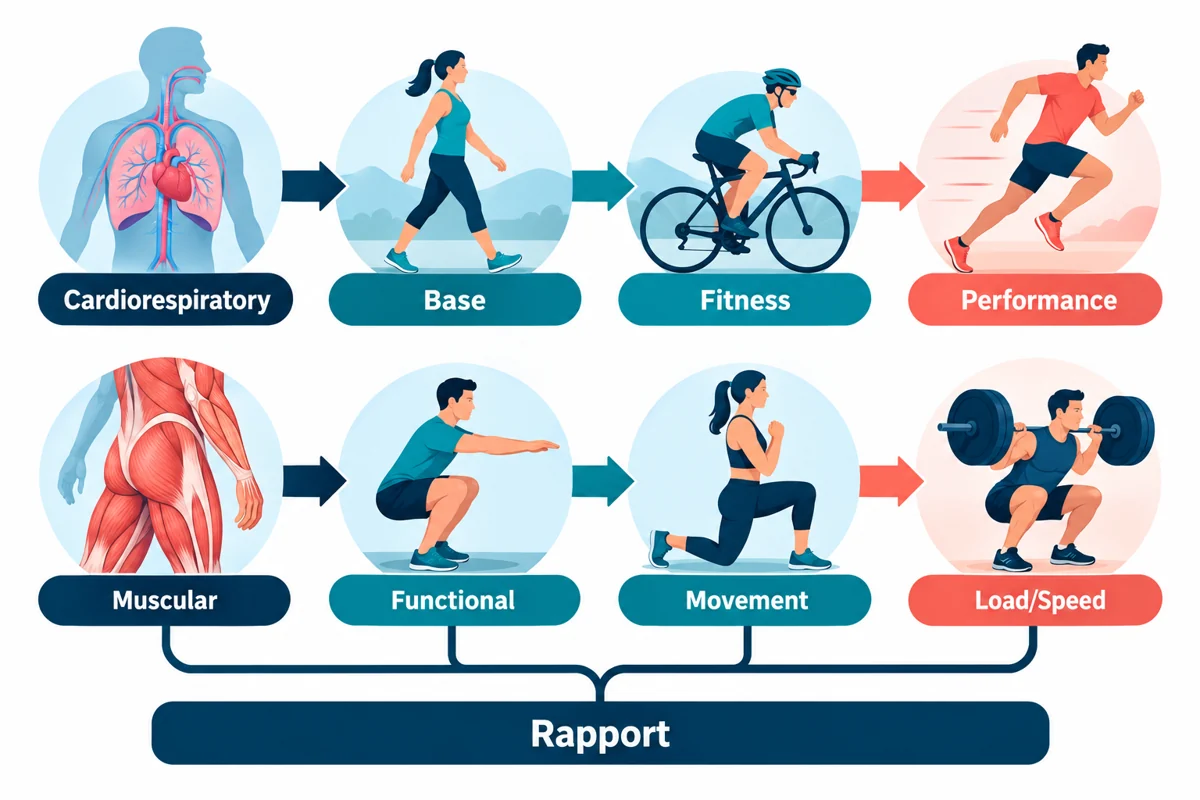
Two decisions belong in one program
The current ACE Integrated Fitness Training model has two training components: cardiorespiratory and muscular training. Each component has three phases. A client may be in a different phase for each component because readiness for aerobic work and readiness for a loaded movement are separate questions. Matching the phase numbers across the two tracks is not the objective.
This guide follows the 2020 revision, which remains the structure shown in ACE's current public explanation and programming template. Older ACE materials use four-phase presentations. Keep those edition differences visible when studying. The model is a way to connect assessment, goals, and exercise decisions, with rapport and behavior-change support continuing throughout the relationship. It is not simply a chart for assigning increasingly difficult workouts.
Cardiorespiratory Base Training
Base Training emphasizes establishing suitable participation with zone 1 work below the first ventilatory threshold, or VT1. Comfortable conversation is a useful field cue for this intensity. A client who is trying to build a consistent routine has a different immediate need from an established endurance competitor. More demanding intervals do not automatically solve an adherence problem.
Imagine a fictional client who has not maintained a regular walking routine and wants to be more active. The relevant starting decision is to make appropriate activity manageable and repeatable. Selecting Performance Training because it sounds more effective misses the stated need. The program still needs screening, an appropriate starting task, and attention to the client's preferences and circumstances. The phase label does not replace these decisions.
Fitness and Performance Training
Fitness Training builds on base work by introducing zone 2 intervals, from VT1 to just below the second ventilatory threshold, VT2. Performance Training adds appropriate zone 3 work at and above VT2 within a periodized mix of intensities. These are differences in training emphasis, rather than instructions to remove lower-intensity work as the client progresses.
In a learning comparison, a client with established moderate activity who is ready for controlled intervals differs from a prepared client pursuing an endurance-event goal. The first case points toward Fitness Training. The second may justify Performance Training when the necessary readiness is present. A higher phase is not an award for attendance, and not every client needs to pursue the final phase to achieve a meaningful personal goal.
Muscular Functional Training
Functional Training addresses postural stability and mobility through the kinetic chain. It includes attention to core function, balance, flexibility, and muscular endurance as needed. The focus is establishing the capacity that supports later movement and loading. It does not mean that every exercise must resemble a sport or be performed on an unstable surface.
For example, a fictional client may tolerate regular cycling while struggling to organize a controlled squat. The aerobic routine does not prove readiness for heavy squat loading. Functional Training can be the muscular emphasis while the cardiorespiratory component sits in a different phase. Read each assessment finding for the quality it actually measures. This avoids letting one strong result erase an unrelated limitation in the program.
Muscular Movement and Load/Speed Training
Movement Training develops the five primary movement patterns: bend-and-lift, single-leg movement, pushing, pulling, and rotation. Functional work remains relevant as preparation and support. Load/Speed Training adds demands that fit goals involving muscular force and movement speed once the required patterns and control are established. Its programming can address several muscular outcomes according to the client's needs.
A controlled unloaded pattern and a poorly controlled heavy pattern are not equivalent demonstrations of readiness. If an added load disrupts the task, the response is to reconsider the demand and preserve the training purpose. Learning the phase name should help explain that decision. It should not create pressure to keep a client at a higher demand merely because a previous session used that label.
Pair the components independently
The two components can be combined according to the individual. ACE explicitly describes this independence. A client might use cardiorespiratory Fitness Training and muscular Functional Training in the same overall plan. There is no requirement to advance the muscular track just to make the names sound equally advanced. Likewise, a resistance-trained person may need a simpler starting approach for aerobic participation.
For practice, draw two separate columns and assign a phase in each. Write one finding that supports the cardiorespiratory decision and another that supports the muscular decision. If the explanation uses the same fact for both, check whether it really applies to both capacities. This small exercise exposes a common error: treating overall fitness as one score instead of a set of task-specific observations and goals.
Use the model within the client relationship
Rapport, investigation, planning, and action describe the professional relationship process. Assessment and programming fit within that process, and communication continues during training. A technically plausible phase choice still needs to make sense to the client and be workable in daily life. Preferences, health information, practical barriers, and goals help determine how the plan is delivered.
A useful revision method is to explain a phase choice in one sentence about the client, followed by one sentence about the exercise emphasis. For example, identify the need for regular participation, then connect it to suitable base work. Avoid explanations that merely repeat the phase name. After answering the questions below, inspect why each alternative fails: it may belong to the wrong component, use the wrong intensity, or skip an important readiness finding in the case.
Put the concept into practice
Answer an original 30-question set for your chosen certification, then review your domain report.
Try 30 free questionsUSD 9.99 · Access detailsSee the current purchase availability and access terms on the product page.
Questions about this topic
Must the two training components use matching phases?
No. Cardiorespiratory and muscular phases are selected independently according to the individual findings and goals.
Does this guide use the older four-phase model?
No. It follows the 2020 revision and the current ACE public three-phase structure for each component.
Official sources
Checked 27 October 2026
- ACE Integrated Fitness Training model · 2026-10-27
- ACE IFT model: what changed in 2020 · 2026-10-27
- ACE IFT exercise programming template · 2026-10-27
- ACE Body-weight Training by Design (September 2026) · 2026-10-27
- ACE Using Mover Method with IFT · 2026-10-27
- ACE Answers: official assessment protocols · 2026-10-27